
Shailesh Kumar, MBA

portfolio drawdown management

Managing Drawdowns: How I Protect Capital Without Losing Upside

In 2008, one of my portfolio positions fell 67% in four months. I had bought a small industrial company with a clean balance sheet, a long operating history, and what I thought was a conservative valuation. Then the financial crisis hit, credit markets froze, and customers stopped ordering. The stock went from $18 to $6 […]

Managing Drawdowns: How I Protect Capital Without Losing Upside Read More »

Shannon's Demon Rebalancing Bonus

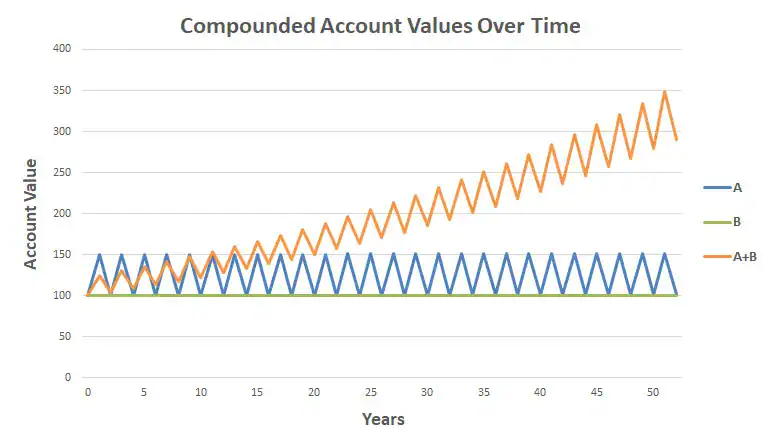
Shannon’s Demon Explained: Why Rebalancing Beats Buy-and-Hold Over Time

I want to tell you about one of the most counterintuitive ideas in all of investing, an idea so strange that when I first encountered it, I spent about an hour with a spreadsheet trying to convince myself it was wrong before I finally accepted that it was right. It is called Shannon’s Demon. And

Shannon’s Demon Explained: Why Rebalancing Beats Buy-and-Hold Over Time Read More »

Full Kelly vs Fractional Kelly

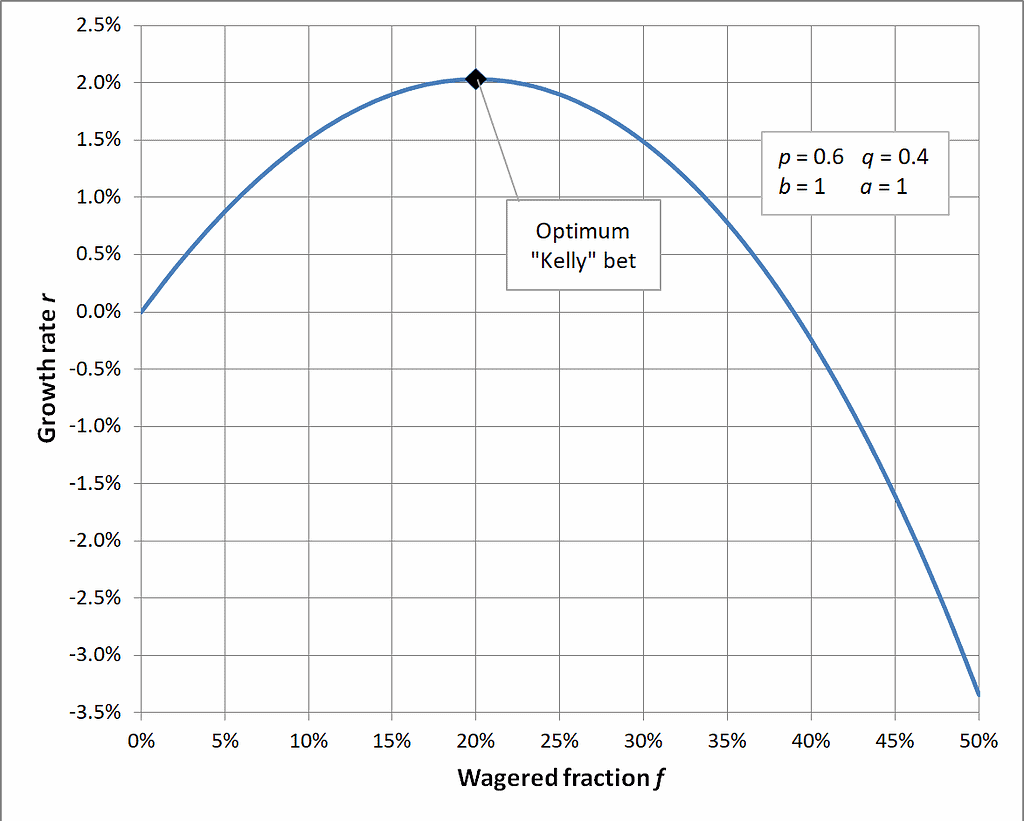
Full Kelly vs. Fractional Kelly: Which Position Sizing Approach Is Right for You?

Most investors spend enormous effort deciding which stocks to buy and almost no effort deciding how much to buy. That is exactly backwards. In the long run, position sizing will have as much impact on your returns as stock selection and it will have more impact on your survival as an investor. I use the

Full Kelly vs. Fractional Kelly: Which Position Sizing Approach Is Right for You? Read More »

deep value stock screening process

My Deep Value Stock Screening Process: From 3,000 Stocks to a Short List of 5

There are roughly 3,000 publicly traded US companies with a market capitalization under $2 billion. Most of them are not worth your time. A small number of them are great values hiding in plain sight. Genuinely cheap, financially strengthening businesses that the market has overlooked, misunderstood, or written off prematurely. The challenge is finding them

My Deep Value Stock Screening Process: From 3,000 Stocks to a Short List of 5 Read More »

financial ratios stock analysis checklist

The 5 Financial Ratios I Check Before Buying Any Stock (With Real Examples)

I have looked at thousands of stocks over the past two-plus decades. For a long stretch of that time, I was doing it wrong. i ended up drowning in spreadsheets, chasing precision at the cost of judgment, and convincing myself that more data equaled better decisions. It didn’t. What I eventually learned is that a

The 5 Financial Ratios I Check Before Buying Any Stock (With Real Examples) Read More »

market anomalies value investing

Market Anomalies That Persist: Why Value, Size, and Low Volatility Still Work

The efficient market hypothesis holds that all available information is already reflected in stock prices, making it impossible to consistently beat the market through fundamental analysis. It is an elegant theory. It is also, as decades of empirical evidence now demonstrate, substantially incomplete. Certain return patterns called anomalies because they should not exist in a

Market Anomalies That Persist: Why Value, Size, and Low Volatility Still Work Read More »

tariffs investing strategy 2026

Tariffs, Trade Wars, and Your Portfolio: How Value Investors Should Respond in 2026

Markets hate uncertainty. Value investors, at their best, are supposed to thrive in it. That is the theory. The practice requires more discipline because tariff-driven volatility feels different from a normal correction. The headlines are persistent, the policy outcomes are genuinely unpredictable, and the second-order effects on supply chains and corporate margins are harder to

Tariffs, Trade Wars, and Your Portfolio: How Value Investors Should Respond in 2026 Read More »

annual report

Annual Report vs. 10-K: What’s Different and Which Sections Value Investors Should Read

Here is something many new investors do not realize: the glossy annual report your broker links to and the 10-K filed with the SEC are not the same document. One is a marketing tool. The other is a legal document. As a value investor, you should spend most of your time on the legal document.

Annual Report vs. 10-K: What’s Different and Which Sections Value Investors Should Read Read More »

Inner Circle Performance Chart 2026 - Astute Investor's Calculus

YTD 23.76% Total Return Vs 5.7% S&P 500 for Inner Circle Portfolio – May 2, 2026

We finished 2025 with Time Weighted Return of 23.5% compared to 17.8% with S&P 500. In the first 4 months of 2026, our portfolio has powered ahead, returning 23.76%. S&P 500 in the same time this year has returned a very respectable 5.7%. The Russell 2000 small cap index has returned 13.21% YTD. We consider

YTD 23.76% Total Return Vs 5.7% S&P 500 for Inner Circle Portfolio – May 2, 2026 Read More »

how to calculate intrinsic value

How to Calculate Intrinsic Value: 3 Methods Every Investor Should Know

Intrinsic value is the cornerstone of everything I do as a value investor. It is the number I am trying to approximate, not predict with false precision, but approximate well enough to know whether the current market price offers a meaningful discount. Get that wrong, and the rest of your analysis is window dressing. The

How to Calculate Intrinsic Value: 3 Methods Every Investor Should Know Read More »

Scroll to Top