Have you ever met an 11-year-old shareholder? That’s what Warren Buffett’s life was about at that age. At the tender age of eleven, the boy who would go on to become the Oracle of Omaha was already fiddling around in the stock market, having bought a few shares of Cities Service. Today, Buffett is one of the wealthiest people in the world. He is the “Oracle of Omaha” and the chairman, CEO, and largest shareholder of Berkshire Hathaway, his multinational conglomerate and investment company. Currently, he comes in at number 4 on the all-time rich list, but he’s played hot potato with the top spot more than once in his lifetime. At the end of the day, his success is beyond question. In the half-century between 1964 and 2014, $1,000 invested with Buffett in 1964 would be worth $10.5 million in 2014.
With Warren Buffett set to retire at the end of 2025, this is a good time to take a look back at his career and review how his investment philosophy evolved over time.
Editor’s Note:
This article was originally published on Value Stock Guide prior to 2022. It has been lightly edited for clarity and current context, as the core investment principles remain relevant today.
Back to the Beginning
Buffett always had his eye on money. As a high schooler, he and a friend bought a used pinball machine for $25 and placed it in a barber shop. A few months later, they sold that machine and a few others – pocketing a cool $1,200. In 1945, that money would have had the same buying power as $16,000 does in 2017.
By the age of 18, a time when most kids today are worrying about what they should write on their college admissions essays, Buffett had set aside the equivalent of $100,000 today in savings. He would go on to attend the Wharton School at UPenn and then pushed on to Columbia University, where he would meet his friend and mentor Benjamin Graham.

Ben Graham, the father of value investing, left a lasting influence on Buffett. Today, Buffett operates in the mold of your typical Grahamite value investor anymore, but Buffett used the principles laid down by the Columbia University professor to first build his fortune. As Buffett said himself, “Long ago, Ben Graham taught me that ‘Price is what you pay; value is what you get.’ Whether we’re talking about socks or stocks, I like buying quality merchandise when it is marked down.”
Buffett’s Philosophy
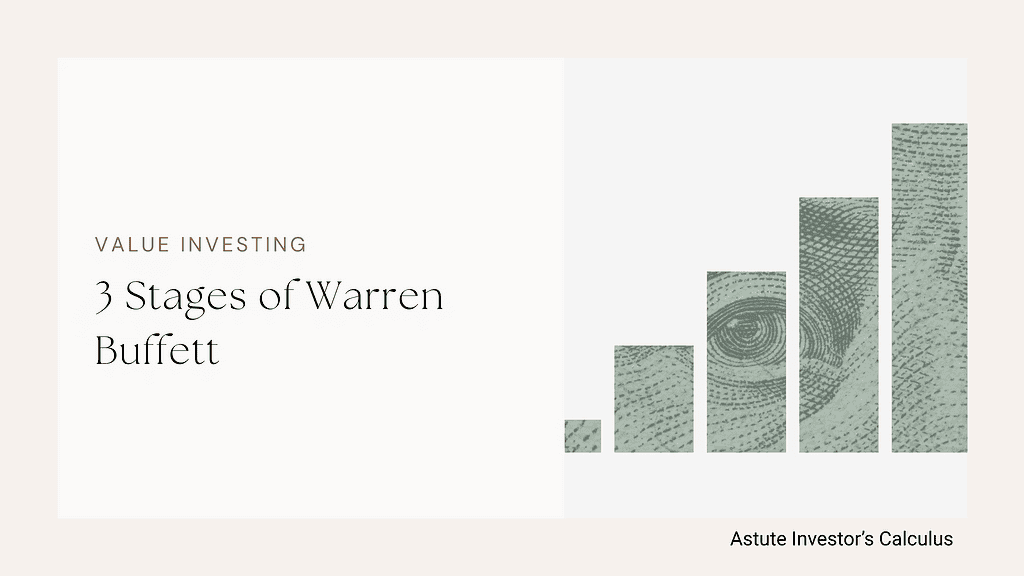
Graham, of course, gave the value investing community concepts like margin of safety, intrinsic value, and the idea of equity ownership representing a stake in a real live business. Buffett still mostly lives by these tenets, but the way in which he deploys capital has changed dramatically over the years. In fact, Buffett has gone through three clear phases since he first sat at Graham’s knee.
Stage 1: Cigars
Early Buffett followed an investing approach known as cigar butt investing, and it is straight from the Benjamin Graham playbook. This method of investing requires the investor to search for mediocre companies trading at deep discounts. It’s a bit like shopping for a DVD in the bargain bin. Everything is marked down and mostly junk, but there might be something you can watch. The approach is called cigar butt investing because it’s likened to the idea of picking up a cigar butt that’s been discarded on the street but still has one good puff left in it.
As Buffett became more experienced and built up his fortune, he was forced to leave this style of investing behind. As one amasses capital, as Buffett did, it becomes harder to move the needle by investing in the types of stocks identified through the cigar butt approach. Buffett admitted as much in his 2014 letter to shareholders, “Cigar-butt investing was scalable only to a point. With large sums, it would never work well.”
It was Charlie Munger, Buffett’s partner at Berkshire, who convinced Buffett to make the change. Buffett tells us that “[t]he blueprint he gave me was simple: Forget what you know about buying fair businesses at wonderful prices; instead, buy wonderful businesses at fair prices.”
Stage 2: Moats
Buffett once described his investing style as ‘85% Ben Graham and 15% Phil Fisher.” Phil Fisher, for reference, is an investor who also favored holding established companies for the very long term. Famously, Fisher held his stake in Motorola from 1955 until 2004, the year he died. As Buffett evolved, it’s fair to say that the ratios he described above flipped. He became 85% Phil Fisher and 15% Ben Graham.
Buffett evolved the cigar butt investing method into the moat investing method. This involves investing in solid companies with solid fundamentals and a wide economic moat. An economic moat refers to when a business has a competitive advantage over other companies in the same space that allows it to earn above-average returns. Think of it like the moat of a medieval castle. The moat allows the castle to keep invading forces at bay.
Pharmaceutical companies are a good example of companies with moats because they often control patents on the drugs they bring to market, giving them exclusive rights to sell drugs that, at times, anyone could make. For example, AbbVie had a patent on Humira, a drug that earned them $14 billion in sales in 2016.
Stage 3: Private Equity
The final stage of Buffett’s evolution is as a kind of private equity firm. Buffett went from buying stakes in amazing businesses to swallowing up whole businesses and incorporating them into the behemoth conglomerate that is Berkshire Hathaway. For instance, in 2010, Berkshire completed the purchase of the Burlington Northern Railroad for $26.5 billion.
Berkshire’s deal to buy Precision Castparts also falls squarely into this new style of doing business. In 2015, he agreed to buy the aerospace and industrial goods producer for $32 billion. At that price, Buffett paid $235 per share, representing a 21% premium over the trading price at the time.
Buffett also has access to deals that are available to a rarified few. In 2008, in the midst of an economic meltdown, General Electric was in trouble and needed cash fast. They turned to Warren Buffett, who basically acted like a bank and took a $6 billion position while leveraging the situation to negotiate incredibly generous terms. Buffett gained $3 billion in preferred shares with a guaranteed dividend of 10% and the option to buy another $3 billion in stock at a fixed price in the future.
More recently, Berkshire Hathaway entered into the following deals that are structured like Private Equity.
- OxyChem Acquisition (announced October 2025): Berkshire Hathaway is buying the entirety of Occidental Petroleum’s chemical division for $9.7 billion in an all-cash deal. This deal is very much in the style of a private equity acquisition because it involves taking full ownership of an established, cash-generating business unit and integrating it into the Berkshire conglomerate’s stable of private companies. A key aspect of this deal is that the cash infusion helps Occidental pay down its own substantial debt load, which indirectly benefits Berkshire as it is a major shareholder of Occidental’s public stock.
- Alleghany Corp. Acquisition (2022): This $11.6 billion all-cash acquisition of the insurance company Alleghany Corp. was a full takeover, characteristic of a major PE buyout, and was Berkshire’s largest deal in recent years until the OxyChem announcement.
- Pilot Flying J (staged acquisition completed 2023): Berkshire gradually acquired full ownership of the truck stop chain Pilot Flying J through a series of purchases, ultimately owning the entire entity as a private subsidiary.
- Dominion Energy Assets (2020): Berkshire acquired natural gas transmission and storage facilities from Dominion Energy for $10 billion, another example of purchasing specific infrastructure assets for full operational control.
Changing of the Guard
With Buffett’s upcoming retirement, and handing over the reigns to Greg Abel, it remains to be see how the investment policy will change under new management. He leaves the company in a solid position. Berkshire Hathaway is currently sitting on a $383 billion cash pile (as of Q3, 2025). This could mean large acquisitions when the right opportunity comes by, or even maybe institute a new dividend as the company comes to grips with the fact that its best days may be behind it. Either way, Buffett’s legacy is set.
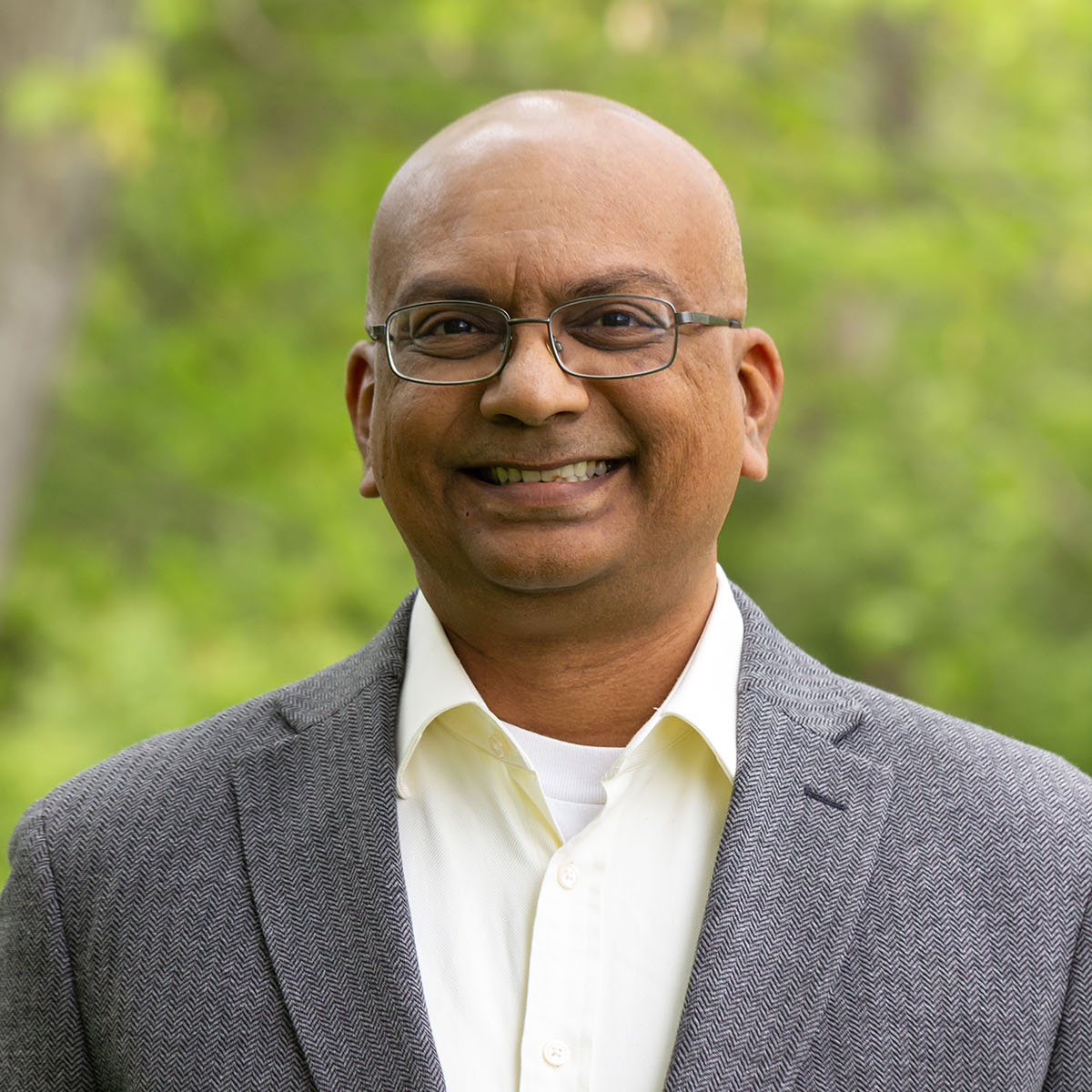
Shailesh Kumar, MBA is the founder of Astute Investor’s Calculus, where he shares high-conviction small-cap value ideas, stock reports, and investing strategies. He is also a strategy and operations consultant focused on measurable business outcomes
His work has been featured in the New York Times and profiled on Wikipedia. He previously ran Value Stock Guide, one of the earliest value investing platforms online.
Subscribe to the Inner Circle to access premium stock reports and strategy insights.
Featured in: