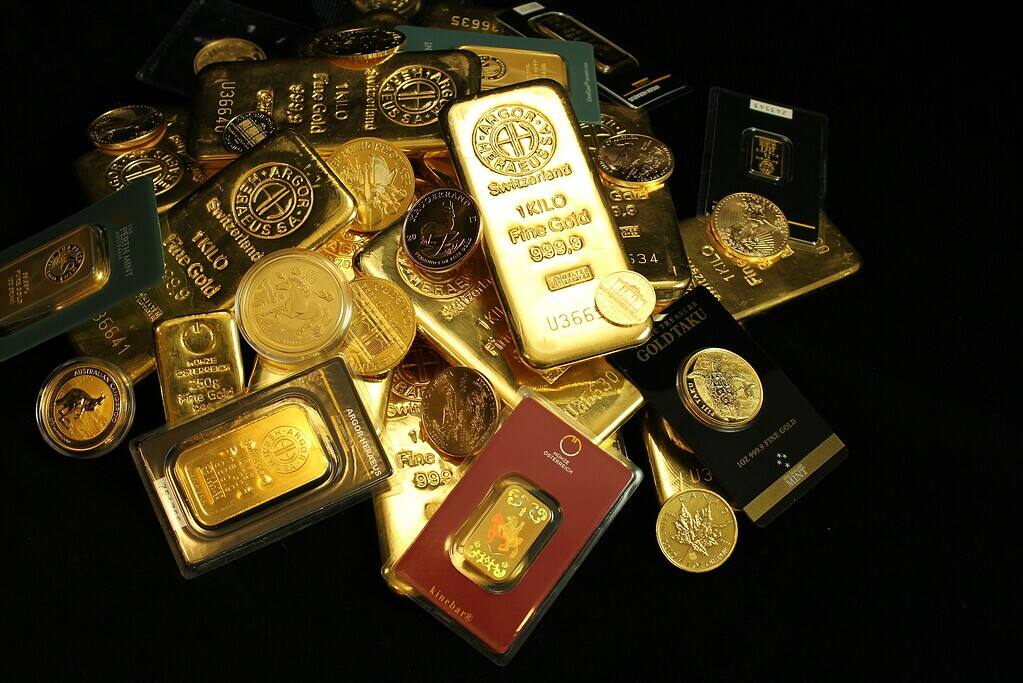
With the global markets in turmoil and the conflict sprouting up around the world, it is no surprise that many investors are now looking for safe haven assets. Gold and silver have traditionally served as one. For investors in the US, there is a parallel trend of the long term decline in the value of the USD.
I have been asked a few times why I do not invest in commodities. As a value investor, it is really hard to wrap my mind around the notion that commodities might be considered an investment. Here is why.
Commodities Have No Intrinsic Value
They have price. But the price is not the same as the intrinsic value. This price is discovered in the market as the intersection of the demand and supply curves. “Investing” in the future movement of price is speculation. True investing lies in the potential that the intrinsic value of the underlying business will be enhanced. The price of the security eventually converges to the intrinsic value of the business. This is how investors can partake in the shareholder value that the business creates.
Reproducibility and Repeatability
In the one of the shareholder missives, Warren Buffett talks about the concept of reproducibility. A pile of gold does not create additional value over time. Whereas farmland or a business will continue to create value year after year with additional production. Investments are those that keep generating new value.

But how is this value created? Aren’t commodities produced by real businesses? It is always a human endeavor. Designing, organizing, planning, manufacturing, servicing, scrapping, tilling, mining, distributing, etc. are some of the ways the value is created or added to make a product. As you trace the lifecycle of production of any given product, you will see many different steps. There are also many different entities of stakeholders at each step. These may be businesses or individuals. They all add something of value towards making the product a reality. Each of these stakeholders is rewarded for the value they add. This is how businesses generate revenues.
When the product reaches the market, it is a commodity and has a price based on demand and supply. If the price is sufficiently higher than the input costs of the product, there are profits to be had, which are shared across the value chain of the product. The smaller the gap between the price and the cost, the smaller the profits, and the less investment-worthy are the businesses on the value chain (assuming the stock is fairly priced).
Sometimes, the gap between price and cost is small; many times it may even be inverted. These occur in the industries where the pricing power is very low. These are your typical commodity businesses.
The trick is to find industries and businesses that throw off profits to the shareholders, thereby creating shareholder value. It can happen in the commodity businesses, but only in some special scenarios where the business in question has some level of competitive advantage. Investing in the product, or the commodity, on the other hand, always leaves you at the whim and fancy of the market forces. No one has any special advantage, and ultimately it becomes a zero-sum game.
A Commodity Business Can Be a Good Investment in Certain Cases
In many industries, scale gives certain economies that are not available to smaller players and where the barriers to entry are high enough to make new entry unprofitable. While smaller companies may have very small margins, larger producers might enjoy significant profits. Such is the case with Exxon or Grainger. Or a South Korean or Chinese steel manufacturer might enjoy significantly lower employee costs. In other cases, branding may command a premium price, for example, for cereal manufacturers.
Any business may be a good investment if it is undervalued enough. For commodity businesses, and most businesses are commodity businesses since over time there is no competitive advantage, the undervaluation comes from the assets of the business. This is why most value investors start their analysis with the balance sheet first.
Valuing Business Assets – Are They Not Commodities?
Value investors pay special attention to the tangible assets of the business. One can perhaps argue that plant, machinery, etc. are all commodities because they are end products, and therefore assigning a value to them runs counter to my arguments above. Not true. These assets are valued, or priced, based on the utility and the return on assets they provide. Take away the utility, and a perfectly good piece of machinery is worth just the scrap value. Many times, an equipment is worth significantly more when in production than it is in the marketplace.
A piece of gold, in most cases, does not provide any utility (there are some industrial uses, but by and large, gold is priced based on demand which is mostly driven by the “fear” or the “safety” factor). The same goes for oil and any other commodity.
Speculation and Market Volatility
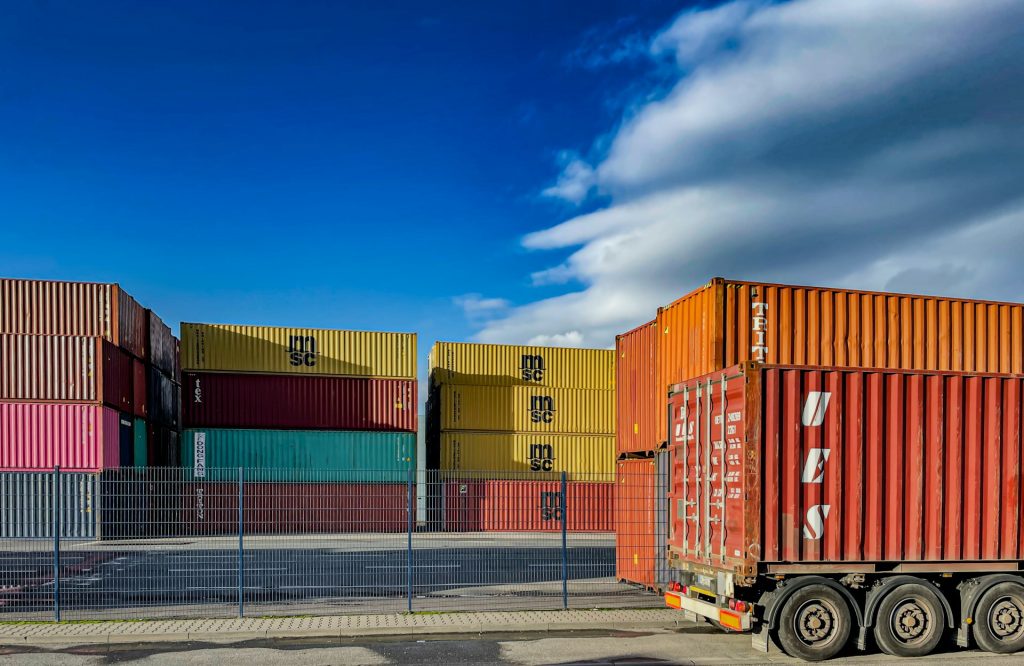
As I write this, there is a war raging in the Middle East and the Strait of Hormuz is closed. This is causing a disruption in the supply chain of various different commodities, including oil, natural gas, fertilizers, and more. Expectedly, the prices of these commodities have risen significantly.
These situations can be very profitable for certain investors. However, keep in mind that there is very little opportunity to profit from this systematically. If you have a thesis that the supply disruptions are long term, you can test this thesis by investing some capital. However, I consider these inherently unpredictable.
There are longer term trends that can be more reliable. For example, demand for certain metals and rare earths is in a secular long term uptrend due to increasing use in new tech and datacenters. Again, the day to day price of these commodities can be volatile as the contracts are entered into and commodity is moved around the world. If you invest in a commodity producer (miners or refiners or transporters), you get to benefit from the elevated spot prices as these companies see high profitability and cash flow and return more of the profits to the shareholders in terms of dividends and share buybacks. These kind of macro environment is the perfect time for these capital intensive industries to de-leverage as well.
Photo by Zlaťáky.cz on Unsplash

Shailesh Kumar, MBA is the founder of Astute Investor’s Calculus, where he shares high-conviction small-cap value ideas, stock reports, and investing strategies. He is also a strategy and operations consultant focused on measurable business outcomes
His work has been featured in the New York Times and profiled on Wikipedia. He previously ran Value Stock Guide, one of the earliest value investing platforms online.
Subscribe to the Inner Circle to access premium stock reports and strategy insights.
Featured in: