|
|
|
|
|
|
|
I am active on LinkedIn and X. Please connect with me on these 2 platforms.
|
|
|
|
|
Market Snapshot, Monday, December 8, 2025
- The Fed decision is expected Wednesday, with markets pricing in roughly an 86–90% chance of a 25 bps cut, although some see the possibility of dissent among policymakers given sticky inflation and mixed labor‑market signals. S&P Global
-
|
Global equities are largely steady: Asian markets trade mixed (Hong Kong down, Japan slightly up) as investors wait for the Fed’s move. The Times of India
|
-
|
Meanwhile, a warning published today by the Bank for International Settlements (BIS) flagged rising retail‑driven flows into gold and U.S. equities as signs of a potential bubble, especially in sectors tied to AI and high valuations. Financial Times
|
-
|
On the corporate front, a few headline movers: a big acquisition rumor in the tech space, some volatility among crypto- and tech-linked stocks, and new structural developments in energy/commodities with cross‑listing moves. Barron's
|
Actionable Thesis:
The market stands at a crossroads. A rate cut seems likely — but uncertainty around the Fed’s stance afterward, elevated valuations, and signs of retail exuberance argue for thoughtful positioning. This moment rewards discipline, balance, and a focus on cash flow + quality over speculation.
|
My Take
Gold maybe a bubble but I seriously doubt it. Gold has no intrinsic value. I agree with Buffett on this point. However, Gold reflects the fear and anxiety around the globe as investors and non-investors alike rush to find safe havens to protect their wealth.
|
I do not yet see many of these anxieties going away.
|
The wars continue. Inflation is high and recession is around the corner. There are layoffs and expectations of many more as many jobs are going away.
|
Gold is one asset among many that can serve as a safe haven. I would consider other real assets as well, including commodities and real estate.
|
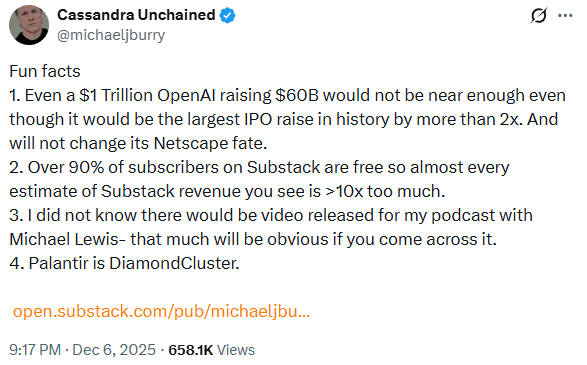
The Big Short Michael Burry has some thoughts on the AI trade:
|
|
|
2 key points he is making:
|
- Netscape spawned a whole new tech revolution but did not survive as a company. He thinks OpenAI is headed towards a similar fate, and,
- DiamondCluster was the hottest management consulting firm back when I was interviewing for consulting jobs coming out of business school. At that time it was still Diamond Technology Partners. They went on to buy Cluster Consulting soon after. I did not join them, but man they were big on campus. Internet bubble had not yet burst and they were riding the wave. Apparently, so is Palantir.
I have no arguments against these 2 points and I do agree with him on both. I disagree with him on many other points, but as a value investor watching the AI industry evolve, I cannot help but draw parallels to what has come before.
|
If you are investing in this sector, stay safe.
|
|
|
|
|
|

|
|
|
|
|
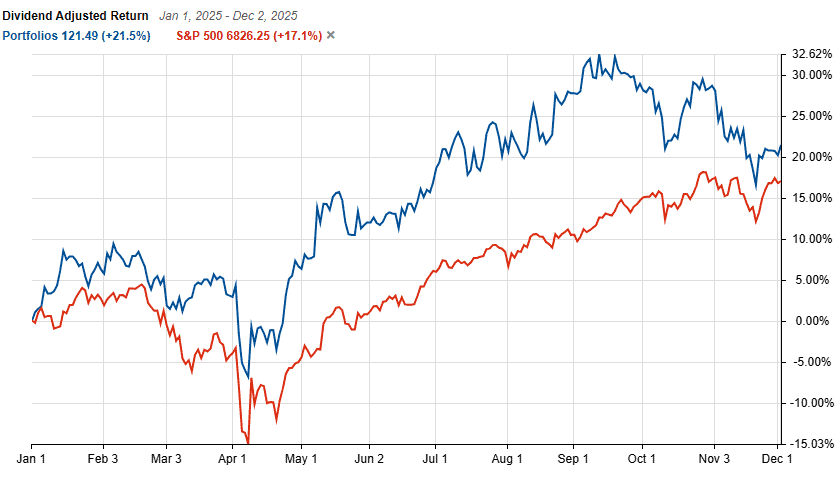
Inner Circle Portfolio Performance
|
|
|
The portfolio performance is updated once a month, and tracked YTD until the end of the prior month. Performance is tracked as time weighted total return.
|
|
|
|
|
|
Upgrade to Inner Circle
- My actual Small Cap Value portfolio with highly profitable but under followed stocks and Kelly Criterion optimized weights
- Detailed investment thesis for portfolio stocks, including target prices and expected returns emailed to you as soon as published
- 1 year membership with NO auto-renewal. Repurchase membership again if you wish to continue for another year once your term completes.
|
|
|
|
|
|
|
|
|
Net-Net Stocks in 2026: Are Graham's Deep Value Criteria Still Findable?
|
|
|
|
Benjamin Graham made his career finding them. Warren Buffett called them the most reliable source of investment returns he ever found. And virtually every serious value investor has, at some point, asked the same question I asked when I first discovered them: why isn't everyone doing this? Net-net stocks, companies trading below their net current asset value, are one of …
|
|
|
|
|
|
|
|
Piotroski F-Score in Practice: How I Use It to Confirm a Value Pick
|
|
|
|
I want to be upfront about something: I do not use the Piotroski F-Score as a primary stock screen most of the time. That might surprise you, given how much ink gets spilled on Piotroski scores in value investing circles. But my process is different: I use it as a confirmation tool, not a discovery tool. Most of the cases, …
|
|
|
|
|
|
|
|
Managing Drawdowns: How I Protect Capital Without Losing Upside
|
|
|
|
In 2008, one of my portfolio positions fell 67% in four months. I had bought a small industrial company with a clean balance sheet, a long operating history, and what I thought was a conservative valuation. Then the financial crisis hit, credit markets froze, and customers stopped ordering. The stock went from $18 to $6 in the time it takes …
|
|
|
|
|
|
|
|
|
|
|
|
|