|
|
|
|
|
|

|
|
Claude Shannon (right) 1955, source: https://www.kerryr.net/pioneers/gallery/ns_shannon2.htm
|
|
Do Not Fear Volatility, Trust the Process
I was asked recently if we should move to cash to protect from the volatility. Perhaps you have wondered this too.
|
Volatility is a feature of the market. And when you invest in small caps, you do not only learn to live with volatility, but you need to embrace it. Volatility creates wealth. The trick is to know how to harvest it well.
|
Enter Shannon's Demon
Claude Shannon, known as the “father of information theory,” was the brilliant mind who gave us the mathematical foundation for everything from digital communication to data compression. But few know he also played with a financial thought experiment now called Shannon’s Demon.
|
This is a strategy that turns volatility into profit.
|
In essence, Shannon showed that even if two assets move sideways on average, you can grow wealth by regularly rebalancing between them. By buying low and selling high through disciplined rebalancing, it transforms market noise into steady compound growth.
|
I am convinced that Shannon's Demon exists, but it takes time to make its presence felt. However, the best results occur when the stocks in the portfolio or uncorrelated - as there are more opportunities to rebalance, and greater rebalancing required.
|
In short, when both the frequency and amplitude of rebalancing is more pronounced.
|
But Taxes!
This constant buying and selling could end up creating many taxable short term capital gains transactions. Worse, some of these could be wash sales (in the US), and therefore profits may not be completely offset with losses.
|
Besides, have some sympathy for your accountant that has to go through reams of statements at tax time.
|
With experience spanning years trying to find the perfect balance, I have settled on a flexible rebalancing schedule of 1-3 months. Typically every quarter, but may do it more frequently if the allocations drift considerably from the target.
|
Works When Stocks Go Sideways, But What do You do When a Stock Breaks Out?
As value investors, we buy stocks at a discount. Often, the stock stays underpriced for some time, before it catches wind and rises. There could be a catalyst or could just be better recognition in the market.
|
So do we start selling as the stock rises? Wouldn't this reduce our potential profit?
|
Yes, and possible yes for individual stocks. But our goal is not to maximize profit on each stock. Our goal is to maximize the portfolio growth and minimize the risk of drawdowns.
|
The math is simple - when the stock price rises and gets closer to our target price, the expected returns now are lower. Therefore, Kelly Criterion will tell us to lighten up on this stock and increase allocations on stocks where the expected returns are higher.
|
Buffett is known for increasing his stake in a company when his conviction is high, often during periods of market turmoil or when a company's prospects are overlooked. High conviction is the same as high expected returns, or greater margin of safety which implies lower risk of capital loss.
|
Often we will completely exit a position before it reaches our target. Sometimes, there is a material improvement in the business prospects and the target price is moved up, in which case it is possible we increase the position size of the stock.
|
Rather than making guesses as how to adjust as prices fluctuate, we use a well defined process to make correct and optimal decisions.
|
Housekeeping Notes
I am slowly transitioning my newsletter from Substack to Astute Investor's Calculus website. Substack has become a very noisy platform, and while many things are more convenient over there, it makes it harder for us to stay disciplined as investors. If you see things are a little different, this is why.
|
|
|
|
|
|

|
|
|
|
|
Inner Circle Portfolio Performance
|
|
|
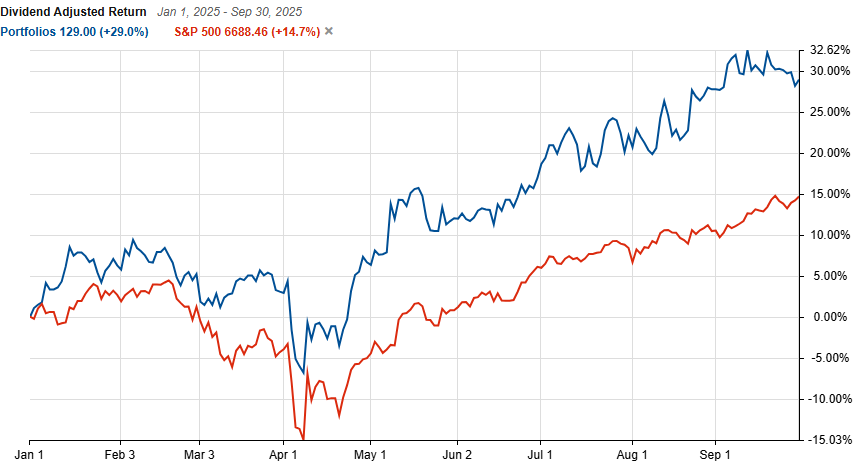
The portfolio performance is updated once a month, and tracked YTD until the end of the prior month. Performance is tracked as time weighted total return.
|
|
|
|
|
|
Upgrade to Inner Circle
- My actual Small Cap Value portfolio with highly profitable but under followed stocks and Kelly Criterion optimized weights
- Detailed investment thesis for portfolio stocks, including target prices and expected returns emailed to you as soon as published
- 1 year membership with NO auto-renewal. Repurchase membership again if you wish to continue for another year once your term completes.
|
|
|
|
|
|
|
|
|
Net-Net Stocks in 2026: Are Graham's Deep Value Criteria Still Findable?
|
|
|
|
Benjamin Graham made his career finding them. Warren Buffett called them the most reliable source of investment returns he ever found. And virtually every serious value investor has, at some point, asked the same question I asked when I first discovered them: why isn't everyone doing this? Net-net stocks, companies trading below their net current asset value, are one of …
|
|
|
|
|
|
|
|
Piotroski F-Score in Practice: How I Use It to Confirm a Value Pick
|
|
|
|
I want to be upfront about something: I do not use the Piotroski F-Score as a primary stock screen most of the time. That might surprise you, given how much ink gets spilled on Piotroski scores in value investing circles. But my process is different: I use it as a confirmation tool, not a discovery tool. Most of the cases, …
|
|
|
|
|
|
|
|
Managing Drawdowns: How I Protect Capital Without Losing Upside
|
|
|
|
In 2008, one of my portfolio positions fell 67% in four months. I had bought a small industrial company with a clean balance sheet, a long operating history, and what I thought was a conservative valuation. Then the financial crisis hit, credit markets froze, and customers stopped ordering. The stock went from $18 to $6 in the time it takes …
|
|
|
|
|
|
|
|
|
|
|