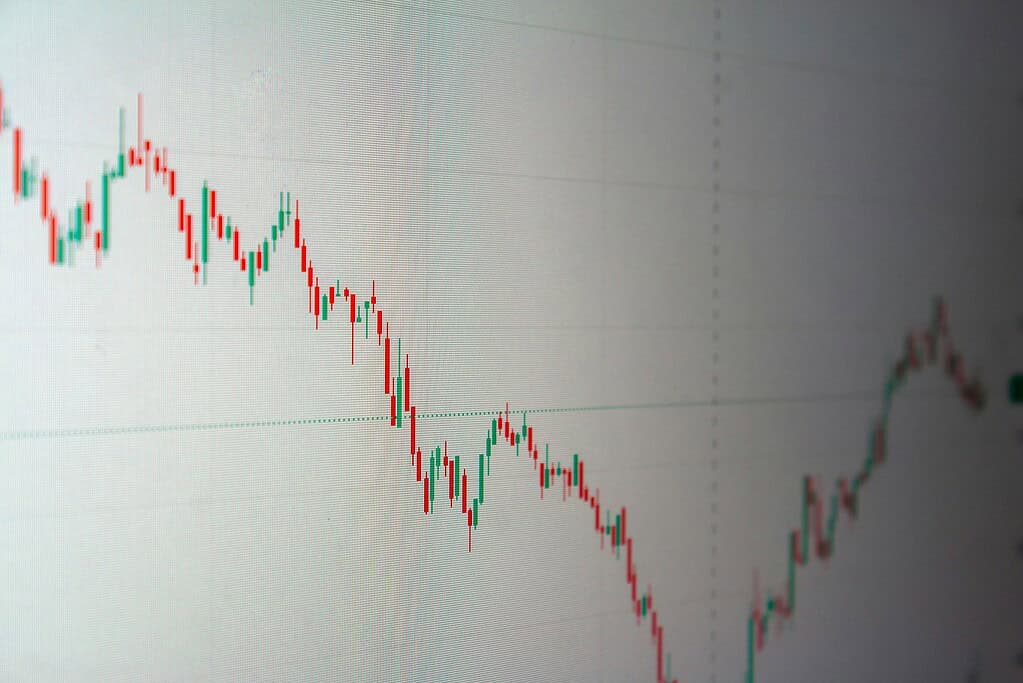
In 2008, one of my portfolio positions fell 67% in four months. I had bought a small industrial company with a clean balance sheet, a long operating history, and what I thought was a conservative valuation. Then the financial crisis hit, credit markets froze, and customers stopped ordering. The stock went from $18 to $6 in the time it takes most people to read a book.
I did not sell.
Two and a half years later I sold at $22.
That story sounds triumphant, and it was in the end, but it was only possible because I had a framework for managing drawdowns before the drawdown happened. Without that framework, the 67% decline would have looked like a mistake that needed correcting. With it, it looked like exactly what it was: a business I understood, temporarily mispriced by a panicked market.

Portfolio drawdown management is one of the most important and least discussed topics in individual investing. I want to give you my actual framework here, not the academic version, but the version I live by.
Key Takeaways
- A 50% drawdown requires a 100% gain to recover; this mathematics makes drawdown prevention worth prioritizing
- Position sizing using Kelly Criterion is the primary tool for limiting single-stock drawdown impact at the portfolio level
- Pre-defined rules for adding, holding, or cutting positions are essential. Decisions made during drawdowns are almost always worse than decisions made before them
- Diversification limits protect against single-thesis risk, not just single-stock risk
- Separating price action from business fundamentals is the core psychological discipline of drawdown survival
The Mathematics of Drawdowns Matter
Let me start with a number that does not get enough attention.
A 50% loss requires a 100% gain to recover. This is just arithmetic. If your $100,000 portfolio falls to $50,000, you need a 100% return on the remaining $50,000 to get back to where you started.
Here is how the recovery math scales:
| Drawdown | Required Recovery Gain |
|---|---|
| 10% | 11% |
| 20% | 25% |
| 33% | 50% |
| 50% | 100% |
| 60% | 150% |
| 75% | 300% |
The convexity here is brutal. Moderate drawdowns are survivable with reasonable recoveries. Large drawdowns become mathematically devastating. A 60% portfolio drawdown, the kind experienced by some concentrated equity portfolios in 2008-2009, requires a 150% gain. Compounding at 10% per year, that takes roughly 9.5 years just to break even. Most investors have neither the capital nor the patience to survive that.
This is not an argument for timid investing. I am fully invested in small-cap value stocks for most of my career, and small caps are volatile. The argument is for rigorous drawdown management that prevents single disasters from defining your long-run outcomes.
Understanding margin of safety is part of this. Buying cheaply limits how far you can fall. But it is only one piece.
Pillar 1: Position Sizing as the Primary Defense
The most important drawdown management tool happens before any drawdown occurs. It is position sizing.
I size positions using a version of the Kelly Criterion, specifically fractional Kelly, which I have written about in detail in Kelly Criterion position sizing and the companion piece on full Kelly vs. fractional Kelly. The Kelly calculation tells me the mathematically optimal position size given my estimated probability of success and the magnitude of outcomes. I use a fraction of that (typically between 25% and 50% of the Kelly recommendation) to account for estimation error and to limit portfolio-level drawdown risk.
In practice, this means my largest positions are typically 12–15% of my portfolio, and most positions are 5–8%. This structure limits the portfolio-level impact of any single terrible outcome.
Here is why this matters specifically for drawdown management: if a position falls 60%, a bad but not inconceivable outcome for a small-cap value stock in a difficult period, the impact on a 7% portfolio weight is a 4.2% portfolio drawdown. Painful, but not devastating and not enough to trigger panic. If that same stock were a 25% position, the portfolio impact is 15%, a significantly different psychological and financial experience.
Additionally, if you adjust your Kelly fractions for correlations between the stocks in your portfolio, you are unlikely to overweight any particular theme or sector. In this case, a decline in any one stock may be offset with an increase in other and the overall portfolio impact could be just a blip.
Position sizing before the fact is the single most powerful drawdown management tool I know. Everything else is secondary.
Pillar 2: Pre-Defined Rules for Add, Hold, or Cut
The worst time to make a decision about a position is when it is down 40%. Your judgment at that moment is compromised by three simultaneous pressures: the pain of the loss, the fear of more loss, and the desire to prove you were right all along. These forces pull in different directions and consistently produce poor decisions.
My solution is to make the key decisions before a drawdown happens.
When I initiate any position, I write a one-page thesis document. Part of that document explicitly answers three questions:
Under what circumstances would I add to this position?
My standard answer: if the stock falls more than 25-30% without a corresponding deterioration in the business fundamentals, and the Piotroski F-Score remains 7 or above, I will consider adding to my position. The additional purchase is sized at roughly half my initial position size. This is buying more of a thesis that is working at the business level while the market is giving me a better price.
Under what circumstances would I hold without action?
My standard answer: if the stock falls and business fundamentals are mixed or uncertain, perhaps one quarter of weaker results but the thesis is still intact, I hold and monitor. No action until I have clearer information.
Under what circumstances would I cut the position?
My standard answer: if the business fundamentals deteriorate: Piotroski score drops below 6, FCF turns negative for two consecutive quarters, or debt coverage ratios weaken materially, I cut the position regardless of where the stock price is relative to my cost basis. The cost basis is irrelevant. What matters is whether the thesis is still intact.
This last point is worth emphasizing. The hardest cuts are positions where the stock has fallen and I have a large unrealized loss. Our psychology screams “don’t lock in the loss.” But when the business has genuinely deteriorated, holding a bad business at a depressed price is no longer value investing since there is no longer any value left.
One point worth noting here. If you recalculate Kelly allocations when prices have fallen, the depressed stock will get an increase in allocation, as the expected return is now higher. This of course is the case where the investment thesis has not changed. In this case, the mechanical Kelly allocation process matches the philosophy of drawdown management outlined above.
For more on the psychological dimensions of these decisions, I have written specifically about managing emotions when markets decline and why process beats emotion in long-run investing.
Pillar 3: Diversification Limits That Protect Against Thesis Risk
Standard diversification advice focuses on not having too much in any one stock. That is necessary but insufficient. The deeper risk is not stock concentration, it is thesis concentration.
If I own five small-cap industrials with similar business models, similar customer bases, and similar economic exposures, I effectively have one thesis in five stocks. When the thesis is wrong (when industrial spending slows, or tariffs hit supply chains, or credit tightens) all five fall together.
My diversification rules address this:
- No more than 35% of the portfolio in any single sector
- When there are more than 1 stocks in any given sector that are great values, purchase the superior one.
- No more than 50% in economically cyclical businesses (businesses where revenue is meaningfully tied to the economic cycle)
- At least some exposure to businesses with defensive revenue characteristics (subscription-like, essential services, pricing power in downturns)
This is not asset allocation for its own sake. It is protection against the specific kind of correlated drawdown that hits concentrated-thesis portfolios hardest.
I wrote about portfolio-level resilience strategies for investors who want to think more systematically about diversification across multiple dimensions.
Pillar 4: Separating Price From Fundamentals
The hardest psychological skill in investing is the ability to look at a stock that has fallen 40% and answer honestly: “Has the business changed, or just the price?” How you answer this question determines whether you are a successful investor or just an amateur.
This sounds simple. It is not. When a stock falls, the market is telling you something. Sometimes it is telling you the business is in trouble. Sometimes it is telling you that other investors are frightened and selling for non-fundamental reasons. These look identical on a price chart.
My process for separating the two:
Step 1: Check the business, not the price. When a stock falls meaningfully, I immediately update my financial analysis. Review the latest quarterly reports and check if revenues, margins, and cash flow trending the way my thesis predicted? Is the Piotroski score holding up? Has anything changed in the competitive landscape?
Step 2: Look for news that explains the price move. Is the decline driven by a specific announcement (earnings miss, management departure, industry news) or is it sympathy selling with the market or sector? Selling driven by fear and correlation often creates opportunity. Selling driven by fundamental bad news demands a fresh thesis review.
Step 3: Ask the brutally honest question. If I did not own this stock today and saw it at the current price, would I initiate a new position given everything I now know? If the answer is yes, I hold or add. If the answer is no, I need to examine why I am still holding.
That third question is the hardest and the most important. Sunk cost bias – the psychological tendency to hold a position because of what you paid for it is one of the most expensive mental errors in investing.
The Drawdown I Still Think About
The 2008 experience I opened with was survivable because the business was genuinely fine. It was a credit cycle disruption affecting customer ordering, not a structural problem with the company. I had done the work before the drawdown, I knew the business, and I had position sizing that let me tolerate a 67% decline in one holding without it threatening my financial stability or psychological composure.
But I have also held positions through drawdowns that were not survivable; businesses that were genuinely deteriorating while I told myself the market was overreacting. Those losses were real and they were expensive. In each case, when I did the honest retrospective, the warning signs were there in the fundamentals. The Piotroski score was sliding. FCF was weakening. I ignored the signals because I had conviction in the thesis.
Conviction is an asset. Conviction that overrides contradictory evidence is a liability. The entire framework I use for drawdown management is designed to make me update on evidence, not to protect my prior beliefs.
When Drawdowns Are Opportunities
I want to be clear about something: I am not primarily a defensive investor. My framework for drawdown management is not designed to avoid all losses. It is designed to ensure that when losses occur they are proportionate, survivable, and not the result of decisions made under emotional stress.
When the market falls broadly and my positions fall with it and the business fundamentals are intact, drawdowns are buying opportunities. This is the moment when dollar cost averaging principles and rebalancing work most powerfully. This is when the rebalancing bonus from Shannon’s Demon is largest.
The investors who benefit most from market drawdowns are the ones who have positioned themselves before the drawdown to be buyers, not sellers. That means arriving at a drawdown with cash or the willingness to redeploy from less-affected positions, with a pre-written thesis on every holding, and with position sizing that allows them to add rather than panic.
That preparedness is what drawdown management is ultimately about not preventing losses, but ensuring that when losses come, you are positioned to benefit from them rather than destroyed by them.
Building Your Own Framework
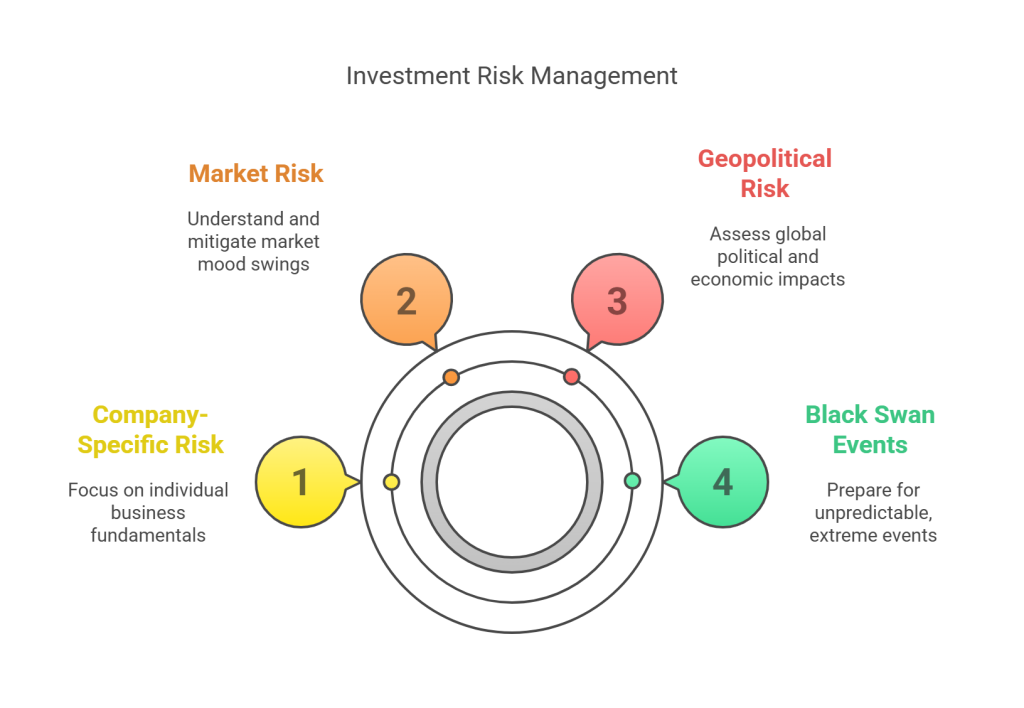
The four pillars I have described: Kelly-based position sizing, pre-defined response rules, thesis-aware diversification, and the discipline of separating price from fundamentals are the bones of my framework. You can adapt each to your own strategy, risk tolerance, and investment style.
What you should not do is skip the framework entirely and hope that your stock-picking is good enough to protect you. It is not. Nobody’s is. The market will present you with drawdowns that are technically recoverable but psychologically unsurvivable without a pre-existing plan.
Build the plan before you need it. That is the entire lesson.
For more on the long-run lessons that inform this framework, including specific mistakes I have made over 25 years of value investing, see my companion piece 25 years of investing lessons.
And for the risk tolerance framework that sits underneath position sizing and diversification decisions, I recommend starting with my article on risk tolerance in value investing.
Subscribe to My Free Newsletter
I write weekly about value investing, portfolio construction, and the psychological discipline that separates long-run winners from the field. Subscribe to my free newsletter below.
For Inner Circle members, I share not just my holdings but the reasoning behind every add, trim, and cut including the difficult decisions made during drawdowns, explained in real time. That transparency is what the membership is built on.
Disclosure: I may hold positions in some of the stocks mentioned as examples in this article.
Photo by Arturo Añez on Unsplash

Shailesh Kumar, MBA is the founder of Astute Investor’s Calculus, where he shares high-conviction small-cap value ideas, stock reports, and investing strategies. He is also a strategy and operations consultant focused on measurable business outcomes
His work has been featured in the New York Times and profiled on Wikipedia. He previously ran Value Stock Guide, one of the earliest value investing platforms online.
Subscribe to the Inner Circle to access premium stock reports and strategy insights.
Featured in: