
The efficient market hypothesis holds that all available information is already reflected in stock prices, making it impossible to consistently beat the market through fundamental analysis. It is an elegant theory. It is also, as decades of empirical evidence now demonstrate, substantially incomplete.
Certain return patterns called anomalies because they should not exist in a fully efficient market have persisted across multiple market cycles, geographies, and time periods. The most important for individual investors are the value premium, the size premium, the low-volatility anomaly, and momentum. Each represents a systematic source of above-market returns that can be harvested with discipline.
I want to be clear about what I mean by “persist.” These premiums are not risk-free. They go through extended periods of underperformance. The value premium had a difficult 2010s. Small-cap underperformed large-cap for long stretches. That is precisely what keeps the anomalies alive: the periods of pain are what prevent them from being arbitraged away.
Key Takeaways
- The value, size, low-volatility, and momentum anomalies have been documented across multiple decades and geographies and remain present in returns data
- Anomalies persist primarily because of behavioral biases, institutional constraints, and the psychological difficulty of following strategies that underperform for years at a time
- The combination of value and small-cap is historically the most powerful pairing, generating returns that exceed either factor alone
- These are not free lunches. All anomalies carry real drawdown risk and require a long investment horizon
- Understanding why anomalies persist is the conviction foundation that lets you hold a contrarian strategy through difficult periods
What Is a Market Anomaly?
A market anomaly is a pattern in stock returns that cannot be explained by standard efficient market theory. If markets were perfectly efficient, prices would instantly reflect all information, and no systematic strategy would generate returns above the risk-free rate except by taking on more risk.

Yet the data shows otherwise. Stocks with low price-to-earnings ratios have historically outperformed stocks with high P/E ratios. Small-cap stocks have historically outperformed large-cap stocks. Low-volatility stocks have historically outperformed high-volatility stocks on a risk-adjusted basis. Stocks with recent price momentum have historically continued their trend in the short run.
The academic debate is whether these excess returns represent compensation for hidden risks (the rational interpretation) or whether they reflect systematic behavioral mistakes by investors (the behavioral interpretation). The honest answer is: probably both, and the distinction matters less for the practicing investor than understanding that the premiums exist and why they are durable.
For an overview of the theoretical framework, see my article on the efficient market hypothesis and its limits. For a deeper look at what the academic literature says about market mispricings, see the myth of efficient markets.
The Value Anomaly
The Evidence
The value premium — the tendency of cheap stocks (measured by price-to-earnings, price-to-book, price-to-cash-flow, or enterprise value-to-EBITDA) to outperform expensive stocks over time — is the most studied anomaly in finance. Documented by Graham and Dodd in the 1930s, formalized by Fama and French in 1992, and replicated across international markets and out-of-sample time periods ever since.
The Fama-French 3-Factor Model formally incorporated the value premium as a systematic risk factor. The premium has been measured at roughly 3–5% annually over long periods, though with significant volatility around that average.
For a dedicated look at the evidence behind the value premium, see my article on the value premium.
Why It Persists
The value premium persists for reasons that are fundamentally behavioral and structural:
Extrapolation bias. Investors consistently overweight recent trends in earnings. A company that has grown earnings for five straight years gets priced for continued growth. A company that has declined for three years gets priced for continued decline. Both projections are typically too extreme. The subsequent mean-reversion where growth companies disappoint and value companies recover is the mechanism by which the premium is generated.
Institutional constraints. Career-risk incentives push professional fund managers toward popular, well-understood businesses. No portfolio manager gets fired for buying Apple. Many managers fear career consequences from owning deeply unpopular, out-of-favor stocks, even when those stocks are fundamentally sound. This institutional herding leaves the value universe underfollowed.
Recency bias and performance chasing. Value underperforms growth during extended bull markets (as it did through much of the 2010s). During those periods, capital flows toward growth strategies, pushing growth valuations higher and value valuations lower. This dynamic eventually creates the conditions for value’s outperformance; not despite the pain, but because of it.
The Size Premium
The Evidence
Small-cap stocks have historically outperformed large-cap stocks by a meaningful margin over long periods — roughly 2–4% annually in the US over the post-war period, with similar premiums documented in international markets. This size premium was formalized alongside the value premium in the Fama-French 3-Factor Model.
The premium is not evenly distributed within small-cap. It is most concentrated in small-cap value and is much smaller or absent in small-cap growth. This is a critical distinction: not all small stocks are equal, and the size premium is strongest when combined with the value premium.
See my detailed article on why small-cap value is the best investment strategy for the full evidence base.
Why It Persists
Institutional neglect. A large mutual fund with $50 billion in assets cannot meaningfully invest in a company with a $200 million market cap. The position would be too small to move the needle and too illiquid to exit gracefully. This structural exclusion means small-cap stocks are systematically underfollowed and underanalyzed relative to large-cap stocks. Less competition means more mispricings.
Liquidity premium. Small-cap stocks are less liquid than large-cap stocks. Investors who need to be able to exit quickly (institutional investors, short-term traders) demand a liquidity premium; they require a lower price (higher expected return) to compensate for reduced liquidity. Long-term individual investors who can afford to be patient collect this premium.
Complexity discount. Small companies are often harder to analyze. Less analyst coverage, fewer investor presentations, sometimes less sophisticated investor relations. The work of analysis is not worth it for most institutional investors. For individual investors doing their own work, this complexity is actually an advantage. The market for the stock is less efficient precisely because fewer people are paying attention.
The Low-Volatility Anomaly
The Evidence
This is the most counterintuitive anomaly in finance. Standard risk-return theory predicts that higher-risk investments should earn higher returns. The low-volatility anomaly is that low-volatility stocks have historically earned returns equal to or higher than high-volatility stocks, and with significantly less drawdown.
This pattern, documented by academics including Robert Haugen, Pim van Vliet, and others, implies that the risk-return trade-off is actually inverse within equities: you earn more by taking less risk in individual stock selection.
Why It Persists
Lottery-ticket demand. Individual investors have a well-documented preference for high-volatility, high-upside stocks; they behave like lottery tickets. This demand artificially inflates prices of volatile, high-risk stocks relative to their expected return. Boring, stable businesses with low volatility are underpriced by comparison.
Benchmark constraints. Institutional investors are measured against market-cap-weighted benchmarks. To beat a benchmark, you need to take different positions than the benchmark and that requires owning volatile, high-turnover stocks. Low-volatility stocks are systematically underowned by benchmark-hugging managers, depressing their prices.
Leverage aversion. Investors who want high returns cannot easily apply leverage (individual investors) or face constraints on leverage (regulated institutions). Instead, they tilt toward high-beta, high-volatility stocks to amplify returns. This demand inflates high-volatility stock prices relative to low-volatility equivalents.
Momentum: The Anomaly That Challenges Value Investors
The Evidence
Momentum: the tendency of stocks that have performed well over the past 6–12 months to continue performing well in the near term is one of the most robustly documented anomalies. It was formally described by Jegadeesh and Titman in 1993 and has been replicated across asset classes and international markets.
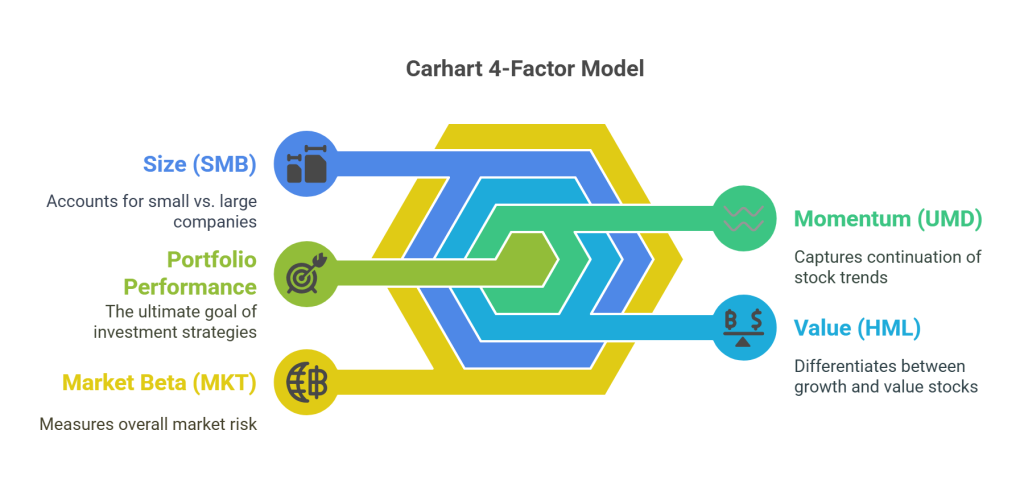
The Carhart 4-Factor Model added momentum to the Fama-French framework as the fourth systematic factor.
Why It Persists (and Why Value Investors Struggle With It)
Momentum persists because of the slow diffusion of information. Investors underreact to good news initially, and the price adjustment happens gradually over months rather than instantly. It also persists because institutional investors follow price trends as a heuristic for business quality.
The tension for value investors is real: value and momentum are negatively correlated in the short run. Value stocks are cheap partly because they have already fallen; they tend to have bad recent momentum. The evidence suggests the combination of value plus minimum-momentum (avoiding recent losers) improves value strategy returns, but adding strict momentum screening to value investing is psychologically and operationally complicated.
My own approach is to accept the value-momentum tension and focus on business quality as a partial substitute: businesses with improving fundamentals (Piotroski F-Score signals, rising free cash flow margins) are more likely to see near-term price recovery than businesses with deteriorating fundamentals.
Why the Combination of Value + Small-Cap Is So Powerful
The interaction between the value and size factors is the central insight behind my investment strategy. The data consistently shows that the combined premium in small-cap value is larger than either factor alone.
This is not additive arithmetic. The combination works because both factors are driven by similar underlying mechanisms: neglect, complexity discount, liquidity premium, and behavioral overreaction. A small-cap value stock sits at the intersection of multiple sources of mispricing simultaneously.
The practical implication is that hunting for cheap, out-of-favor small companies i.e., businesses with low P/E or EV/EBITDA, strong balance sheets, and domestic focus systematically harvests multiple risk premiums at once. This is the core of my Astute Investor’s Calculus approach.
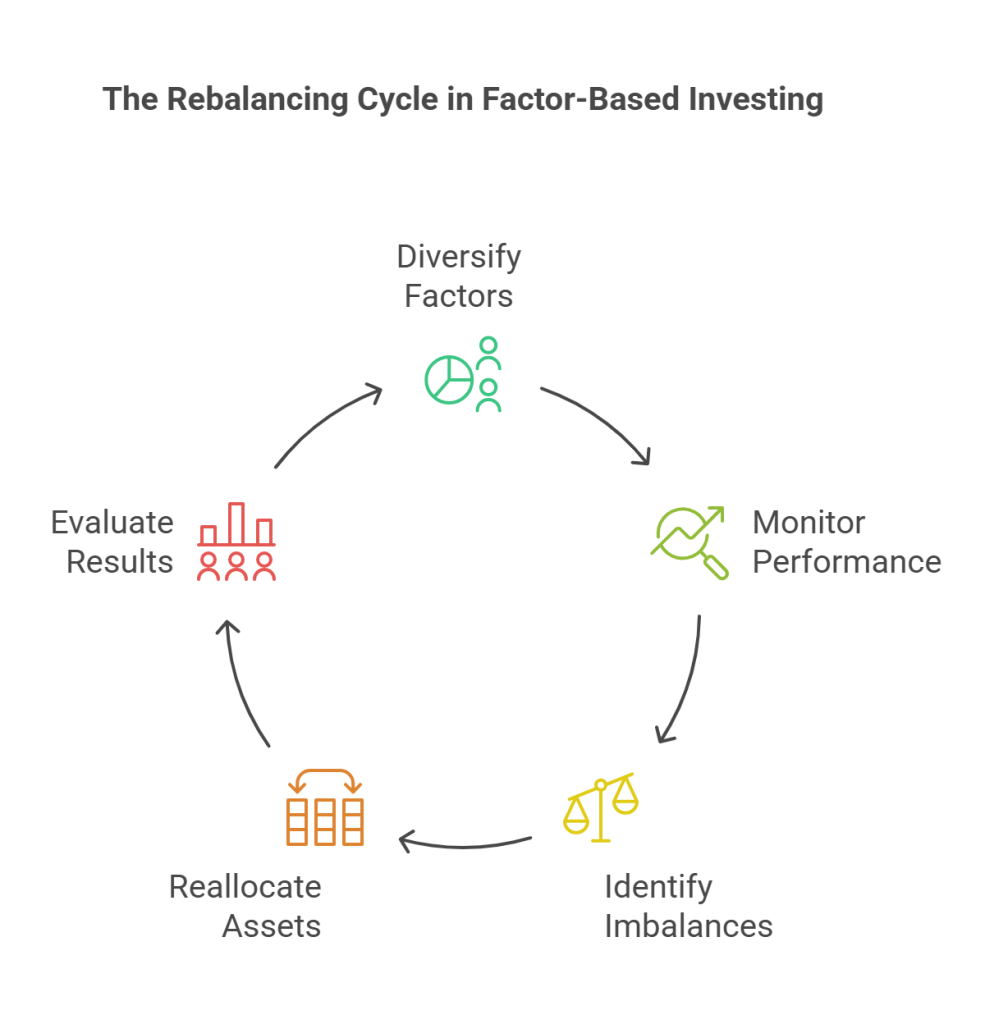
For a discussion of how to implement factor-based approaches systematically, see my article on factor-based investing.
The Durability Problem: Can Anomalies Be Arbitraged Away?
A reasonable objection: if these anomalies are well-documented and widely known, should not they be arbitraged away? Should not smart money flood into value and small-cap stocks until the premium disappears?
The answer, empirically, is no, and for a reason that is important to understand. The anomalies have persisted precisely because they involve extended periods of underperformance that are psychologically and institutionally unbearable for most investors.
Value underperformed growth for essentially the entire 2010s. The size premium was negative in the US for much of the 2016–2020 period. Any investor following these strategies faced client pressure, career risk, benchmark underperformance, and the daily reminder that the strategy “wasn’t working.” Most investors abandoned ship before the reversal.
This is not a bug in the anomaly, it is the feature that keeps it alive. The price of harvesting the value and size premiums is accepting long periods of underperformance. Individual investors, free from benchmark-tracking constraints and client redemption pressure, are the most natural investors to hold these strategies through their inevitable difficult periods.
For a complementary framework: a mechanical quality filter on top of cheap stocks, see my upcoming piece on the Magic Formula and Greenblatt’s approach. And for a forward-looking view on whether small-cap value maintains its edge in the current environment, see my upcoming article on why small-cap value stocks are the best-kept secret.
Putting It Into Practice
The theoretical case for market anomalies is interesting. The practical implementation is what matters.
My own approach:
- Focus on small-cap stocks (under $1–2B market cap) to capture both the size premium and institutional neglect
- Require a meaningful discount to intrinsic value (value premium + margin of safety)
- Filter for balance sheet strength to minimize distress risk
- Use the Piotroski F-Score and free cash flow trends as quality filters to avoid deteriorating businesses
- Size positions using the Kelly Criterion to allocate more capital to higher-conviction, higher-expected-return positions
The anomalies are the why behind the strategy. The process is how you actually capture them without blowing up on individual position mistakes.
Subscribe to My Free Newsletter
Subscribe to my free newsletter. I send weekly stock screens and value investing ideas directly to your inbox. The screens are specifically designed to surface stocks at the intersection of the value and size anomalies: cheap, small, and out-of-favor businesses that the market is ignoring.
For investors who want to go much deeper, my Inner Circle membership gives you access to my live portfolio with full Kelly Criterion position sizes, plus the complete due diligence reports I write on every holding. The portfolio is built explicitly on the anomalies discussed in this article.
Disclosure: I may hold positions in some of the stocks mentioned in related articles on this site.
Photo by Sebastian Herrmann on Unsplash

Shailesh Kumar, MBA is the founder of Astute Investor’s Calculus, where he shares high-conviction small-cap value ideas, stock reports, and investing strategies. He is also a strategy and operations consultant focused on measurable business outcomes
His work has been featured in the New York Times and profiled on Wikipedia. He previously ran Value Stock Guide, one of the earliest value investing platforms online.
Subscribe to the Inner Circle to access premium stock reports and strategy insights.
Featured in: